How to Care for Jewelry: A Guide to Preventing Tarnish and Oxidation, Cleaning and Storage
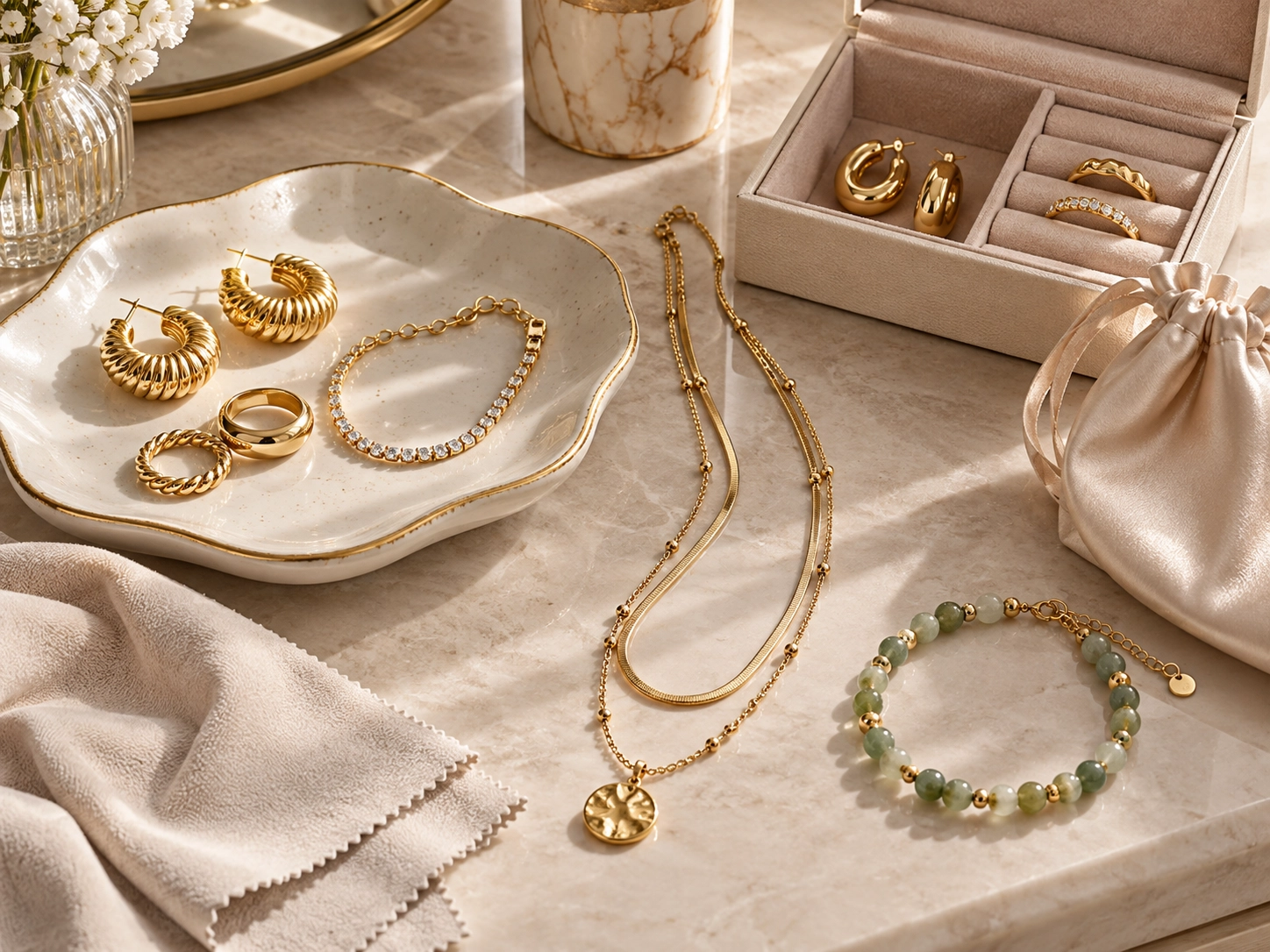
Keeping a favorite necklace, pair of earrings or ring looking as bright as the day you first wore it often comes down to a few simple care habits. Over time, jewelry may become dull, change color or develop what is commonly referred to as “tarnish” due to external factors such as moisture, perspiration, perfume, cosmetics, cleaning products and friction.
In particular, gold-plated jewelry, steel jewelry, zircon and crystal-set designs, and natural stone pieces should not all be cleaned in the same way. Using the wrong cleaning method can scratch the surface, wear away the plating or reduce the brilliance of stones instead of caring for the jewelry.
In this guide, we explain step by step how to clean your jewelry, how to help prevent tarnishing and discoloration, and what you should pay attention to in order to keep your Aulin pieces looking beautiful for longer.
1. Why Does Jewelry Tarnish or Lose Its Shine?
There is no single reason why jewelry may lose its original appearance over time. During everyday wear, the surface of jewelry is constantly exposed to different environmental factors.
Some of the factors that affect jewelry the most include:
- Perfume and deodorant,
- Hand and body creams,
- Sunscreen,
- Hair spray and cosmetic products,
- Perspiration and natural skin oils,
- Sea water and chlorinated pool water,
- Detergents and household cleaning products,
- Prolonged exposure to moisture,
- Storing jewelry pieces where they rub against one another.
With plated jewelry in particular, a change in color does not always mean actual “rusting” or “oxidation.” The plated surface may gradually wear due to chemicals, moisture and friction, which can also cause the jewelry to appear different in color.
For this reason, the main goal of jewelry care is not to try to restore a tarnished piece later with strong chemicals, but to help protect its surface for as long as possible.
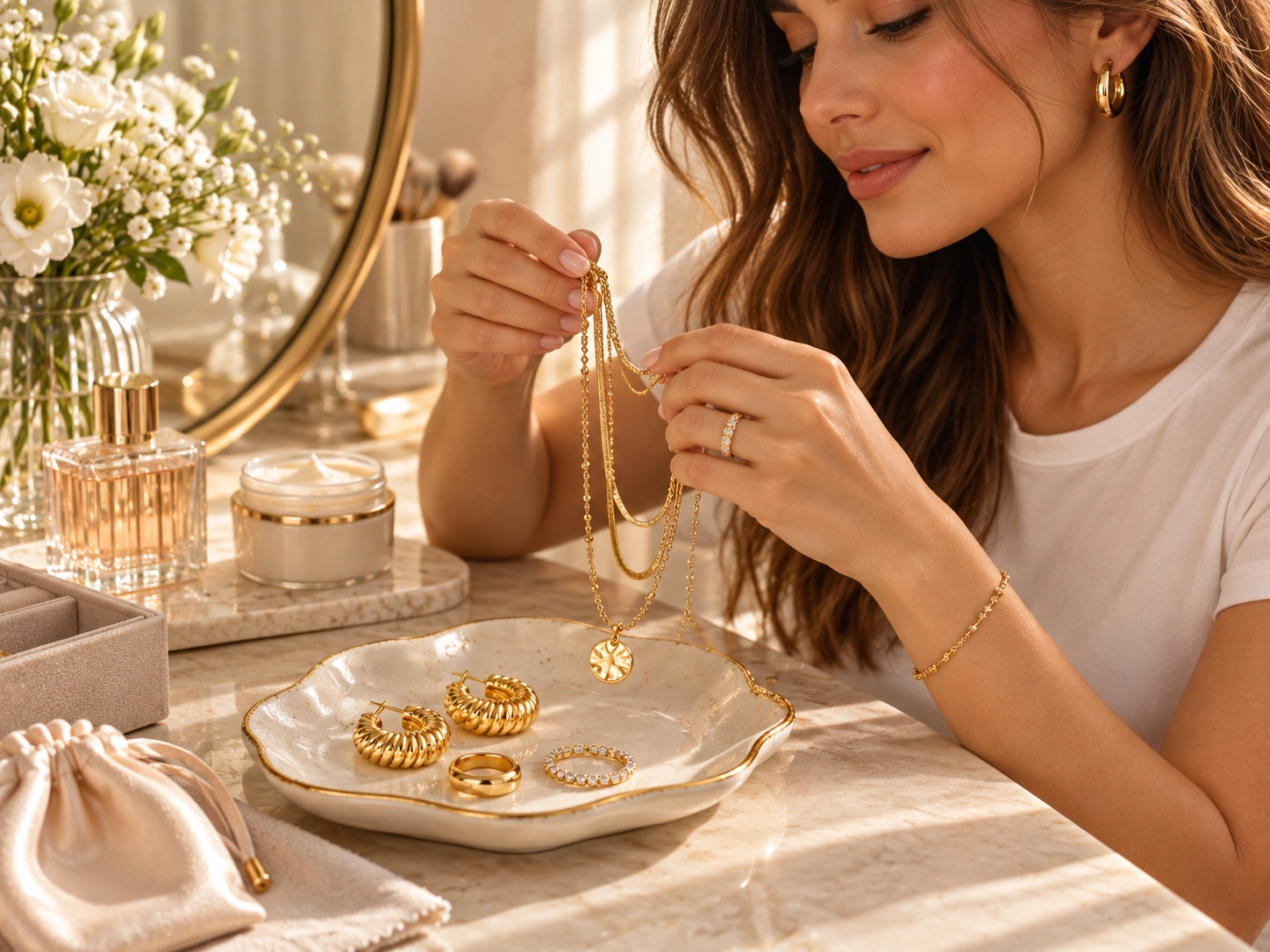 2. The Most Important Rule for Keeping Jewelry Looking New: Put It On Last, Take It Off First
One of the easiest jewelry-care rules to remember is:
Put your jewelry on last when getting ready and take it off first when you return home.
Apply your perfume, deodorant, hair spray, makeup, moisturizer and sunscreen first. Wait until these products have dried or absorbed into your skin before putting on your jewelry.
This significantly reduces the chance of cosmetic products coming into direct contact with the surface of your jewelry.
Likewise, it is a good habit to remove your rings when washing your hands, doing the dishes or cleaning. Bracelets and hand-chain jewelry also frequently come into contact with hand cream, soap and sanitizers, so they deserve particular attention during everyday use.
 3. How to Clean Gold-Plated Jewelry
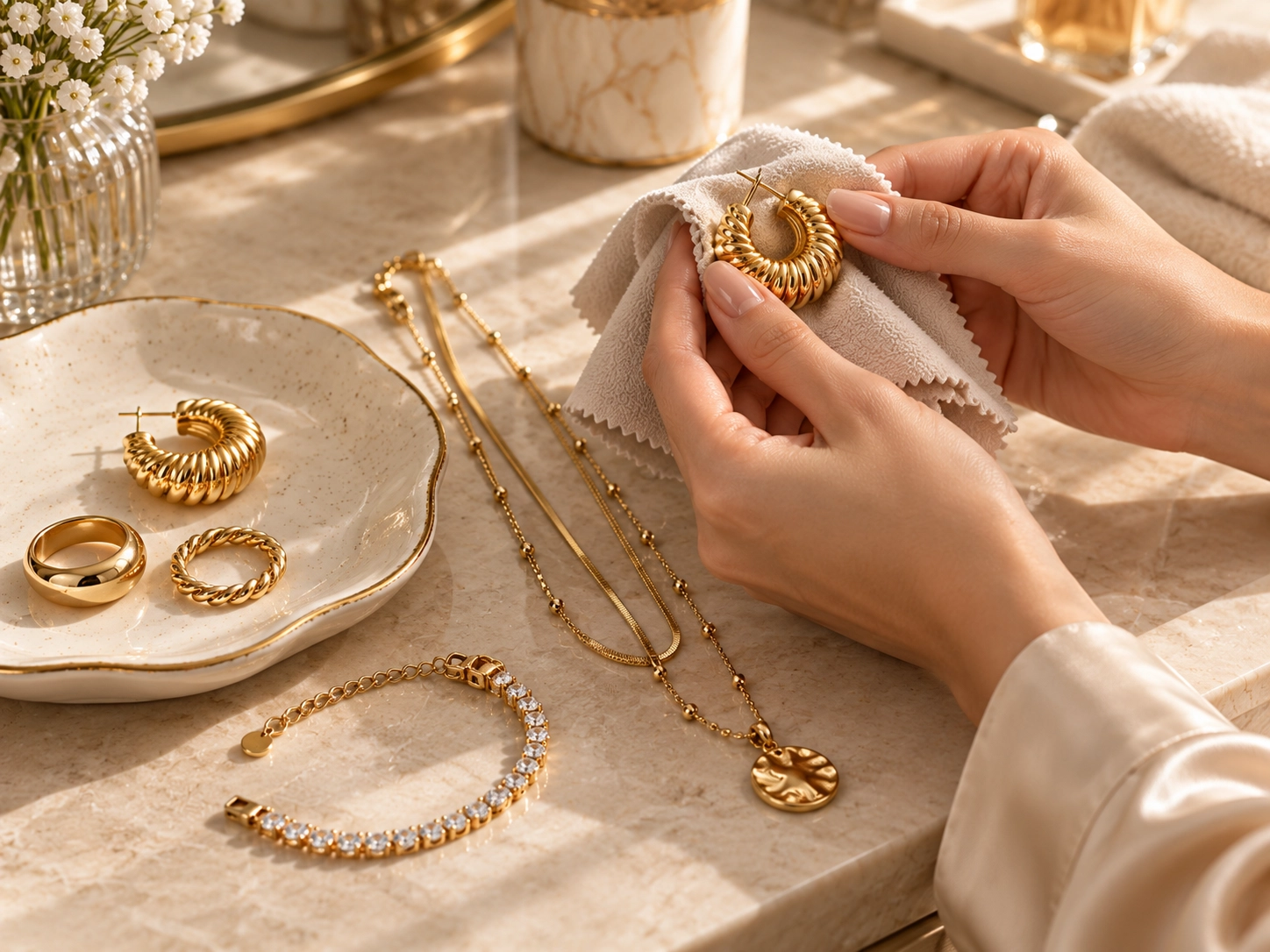
Gold-plated jewelry is a favorite in everyday collections thanks to its elegant appearance. However, because the plating forms the outer surface of the jewelry, it should be protected from aggressive cleaning methods.
For plated pieces in the Aulin collection, such as the 14K Gold-Plated Thick Braided King Chain Necklace or the 14K Gold-Plated Zircon Domed Ring, gentle care is the preferred approach.
For everyday care:
- After removing your jewelry, gently wipe it with a clean, dry and very soft microfiber cloth.
- Pay particular attention to areas exposed to fingerprints, natural skin oils and perspiration.
- Do not rub aggressively.
- Make sure the jewelry is completely dry before storing it.
- Store each piece in a separate pouch or compartment.
Instead of soaking plated jewelry in water every time you clean it, choosing dry and gentle cleaning whenever possible can help preserve the surface.
What Should You Avoid Using on Gold-Plated Jewelry?
Some methods frequently recommended online for cleaning jewelry can be unnecessarily aggressive for plated pieces.
In particular, it is safer to avoid using:
- Toothpaste,
- Baking soda,
- Vinegar,
- Lemon juice,
- Bleach,
- Acetone,
- Cologne and high-concentration alcohol,
- Hard brushes and abrasive sponges.
These types of products are best avoided on plated jewelry.
The idea that “the harder I rub, the shinier it will become” can actually have the opposite effect on plated surfaces and cause the coating to wear more quickly.
 4. How to Clean Steel Jewelry
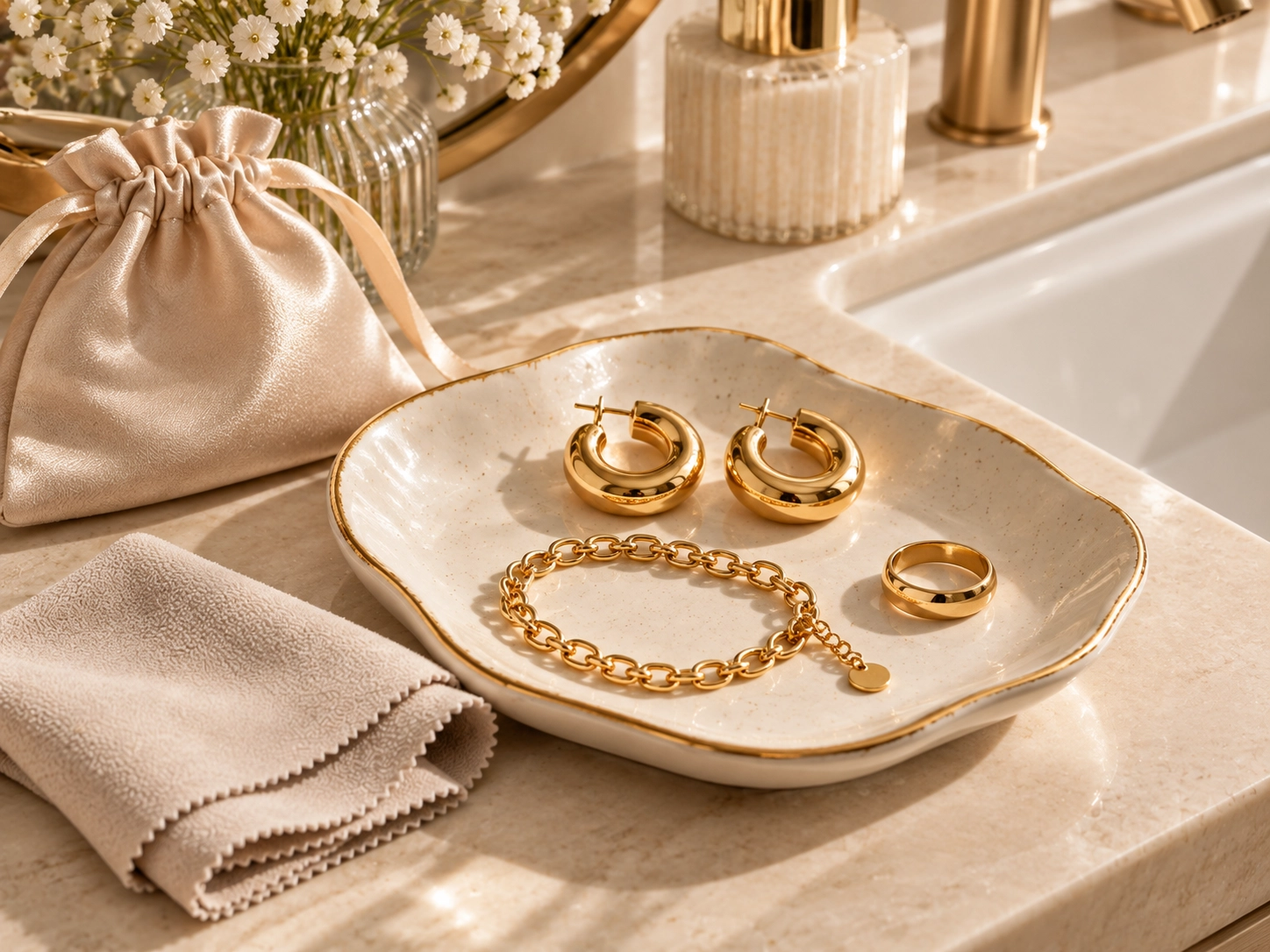
Steel jewelry is generally known for being durable and suitable for everyday wear. However, if a steel piece is also gold plated, care should be taken to protect not only the steel underneath but also the outer plated surface.
For example, Aulin’s 14K Gold-Plated VIP Steel Twisted Hoop Earrings have a steel base but also feature a gold-plated exterior.
For this reason, instead of assuming that “it is steel, so it can always be worn in water,” it is better to follow the care rules appropriate for its plating.
Wiping the surface with a soft cloth after use, reducing contact with perfume and cosmetics, and storing the jewelry completely dry are among the safest ways to support long-term wear.
 5. How to Clean Zircon and Crystal Jewelry
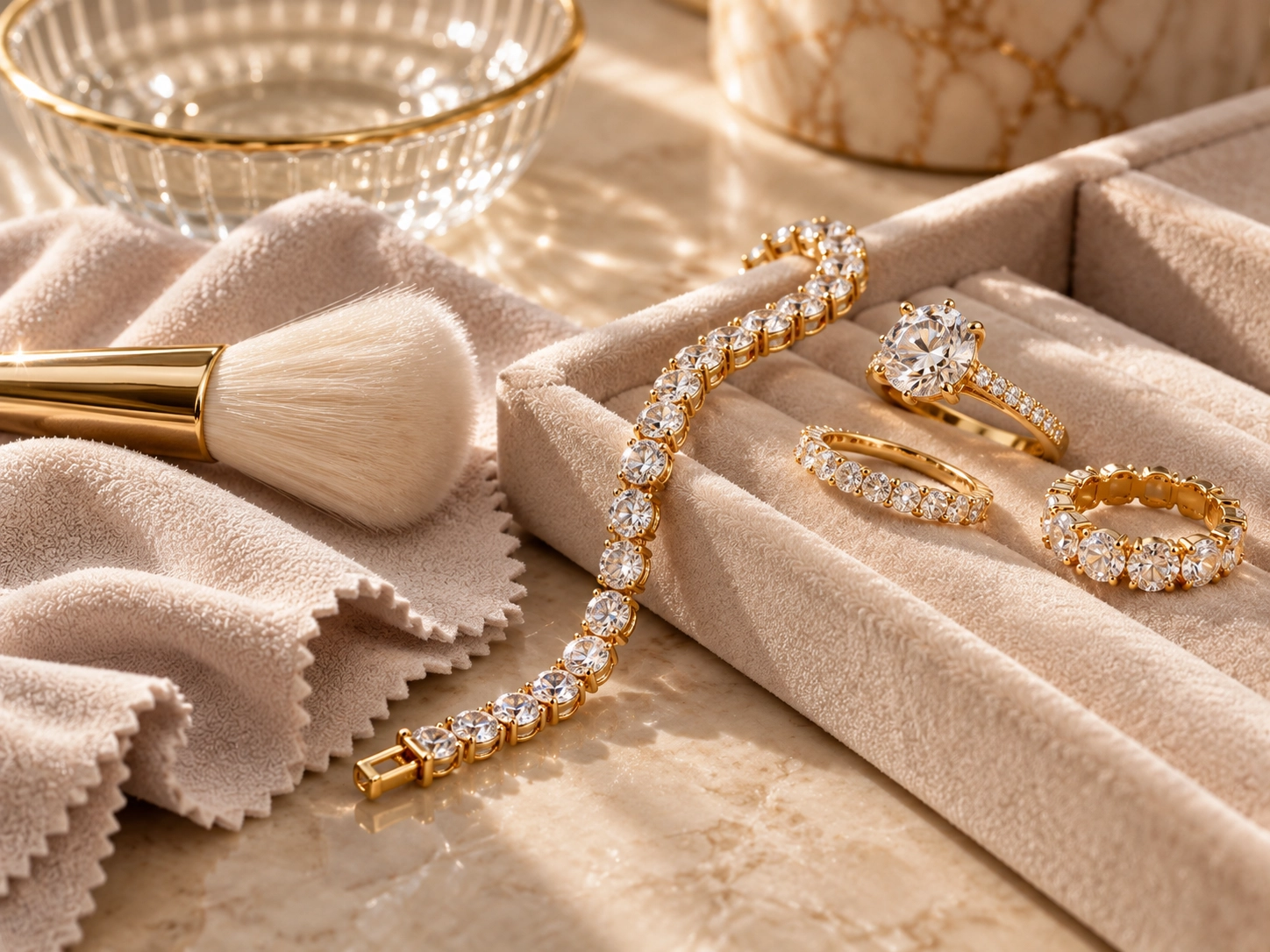
With stone-set jewelry, it is important to protect not only the metal surface but also the settings and brilliance of the stones.
Pieces such as Aulin’s Gold-Plated Geometric Stone Earrings, zircon rings and stone-set bracelets should not be scrubbed aggressively.
When cleaning stone-set jewelry:
- Start with a soft, dry cloth.
- Remove dust around the stones gently without applying pressure.
- Do not leave the jewelry soaking in water for long periods.
- Avoid very hot water.
- Do not use steam or ultrasonic cleaners unless you are certain they are suitable for the stone and setting structure of the piece.
If one of the stones moves or you notice looseness in its setting, it is better to stop wearing and cleaning the piece until it can be checked.
 6. How Should Natural Stone Jewelry Be Cleaned?
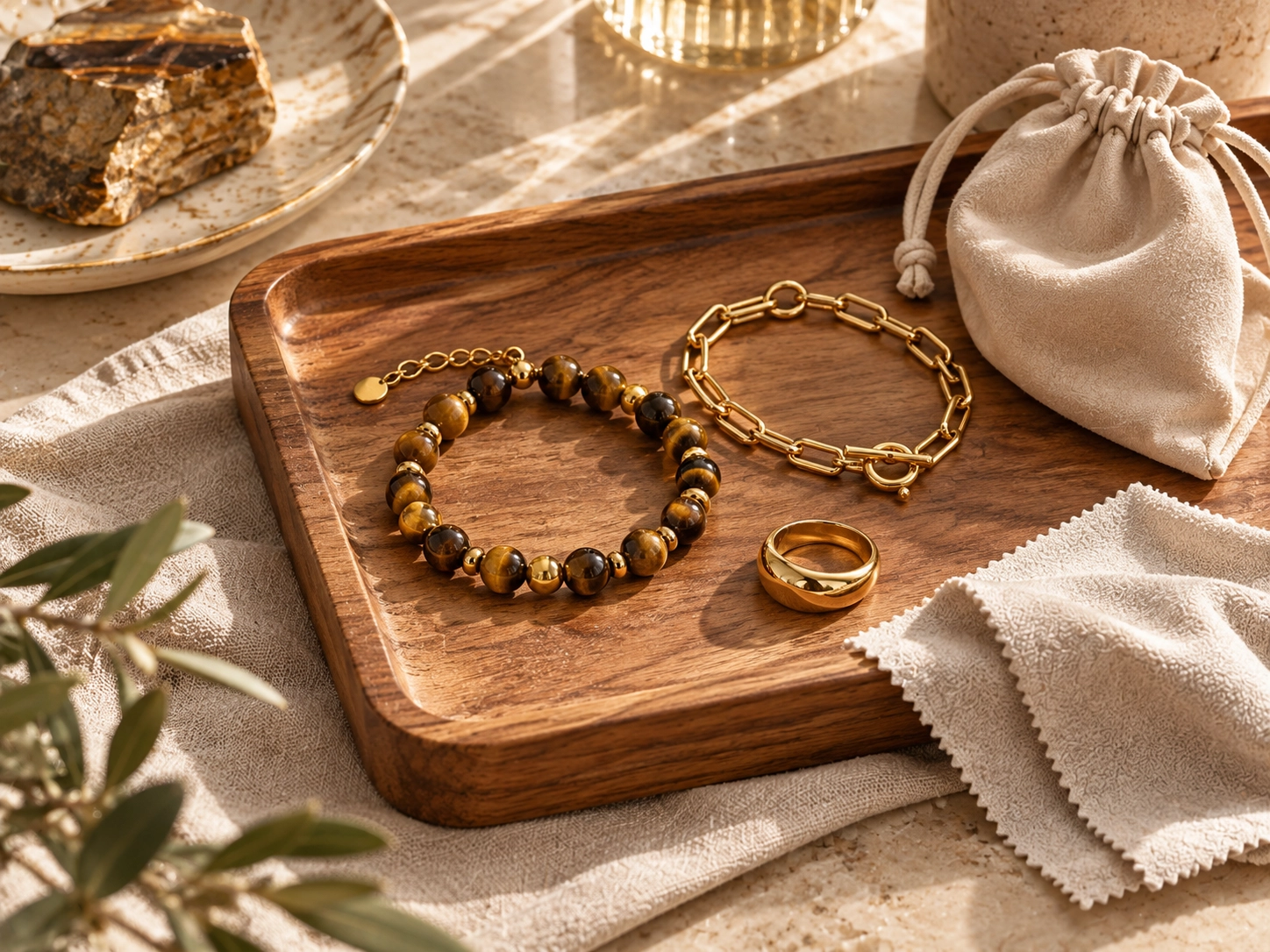
Natural stones do not all have the same hardness, porosity or resistance to chemicals. For this reason, simple and gentle care is generally the safest approach for natural stone jewelry.
For natural stone designs in the Aulin collection, such as the Natural Tiger’s Eye Stone Gold-Framed Stretch Bracelet, it is important to protect not only the stones but also the elastic, connecting components and metal details.
For natural stone jewelry, you can:
- Wipe it with a soft cloth,
- Use a very slightly damp cloth if necessary,
- Dry the piece completely afterwards,
- Keep it away from perfume, creams and cleaning products.
Avoid leaving natural stones soaking in detergent or chemical solutions for extended periods.
 7. Proper Jewelry Storage Is Just as Important as Cleaning for Preventing Tarnish
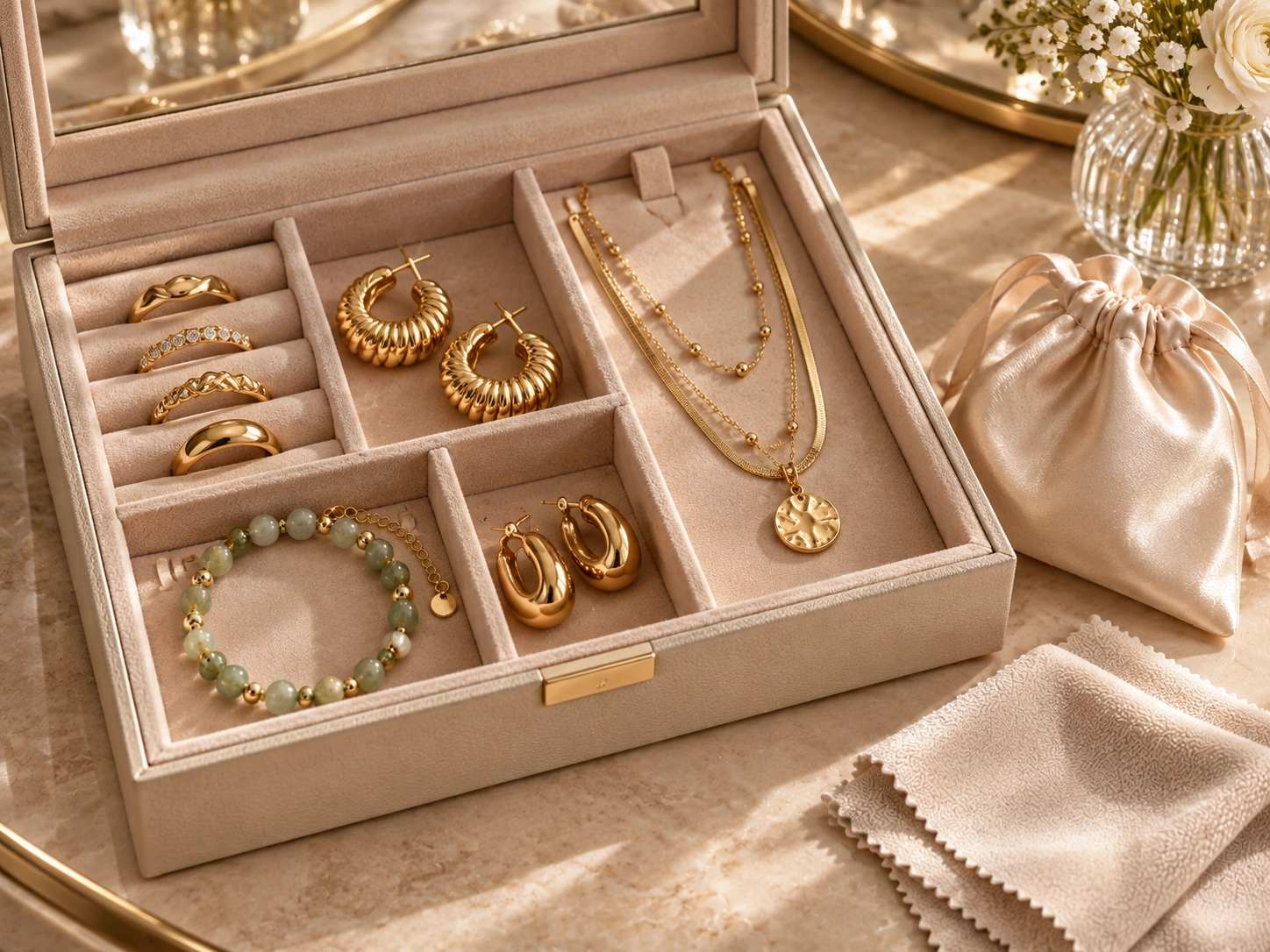
If you carefully clean your jewelry and then place every piece together in the same box, you may be missing one of the most important steps in jewelry care.
When jewelry pieces come into contact with one another, friction can create small scratches. Chains may become tangled, stone-set surfaces may scratch other pieces, and plated surfaces may wear more quickly.
For this reason:
- Store each piece in a separate pouch or compartment whenever possible.
- Do not leave jewelry in the bathroom or other areas with high humidity.
- Fasten necklaces before storing them and, if possible, keep them flat or hanging.
- Position stone-set rings and earrings so that they do not rub against other pieces.
- Make sure jewelry is completely dry before storing it.
- Keep pieces that you will not wear for long periods in a box that protects them from air, moisture and dust.
Proper storage is particularly important for necklaces. It not only helps protect their color and shine but also helps prevent delicate chains from tangling and forming knots.
 8. The Most Common Jewelry Care Mistakes
If you want your jewelry to remain beautiful for as long as possible, try to avoid the following habits:
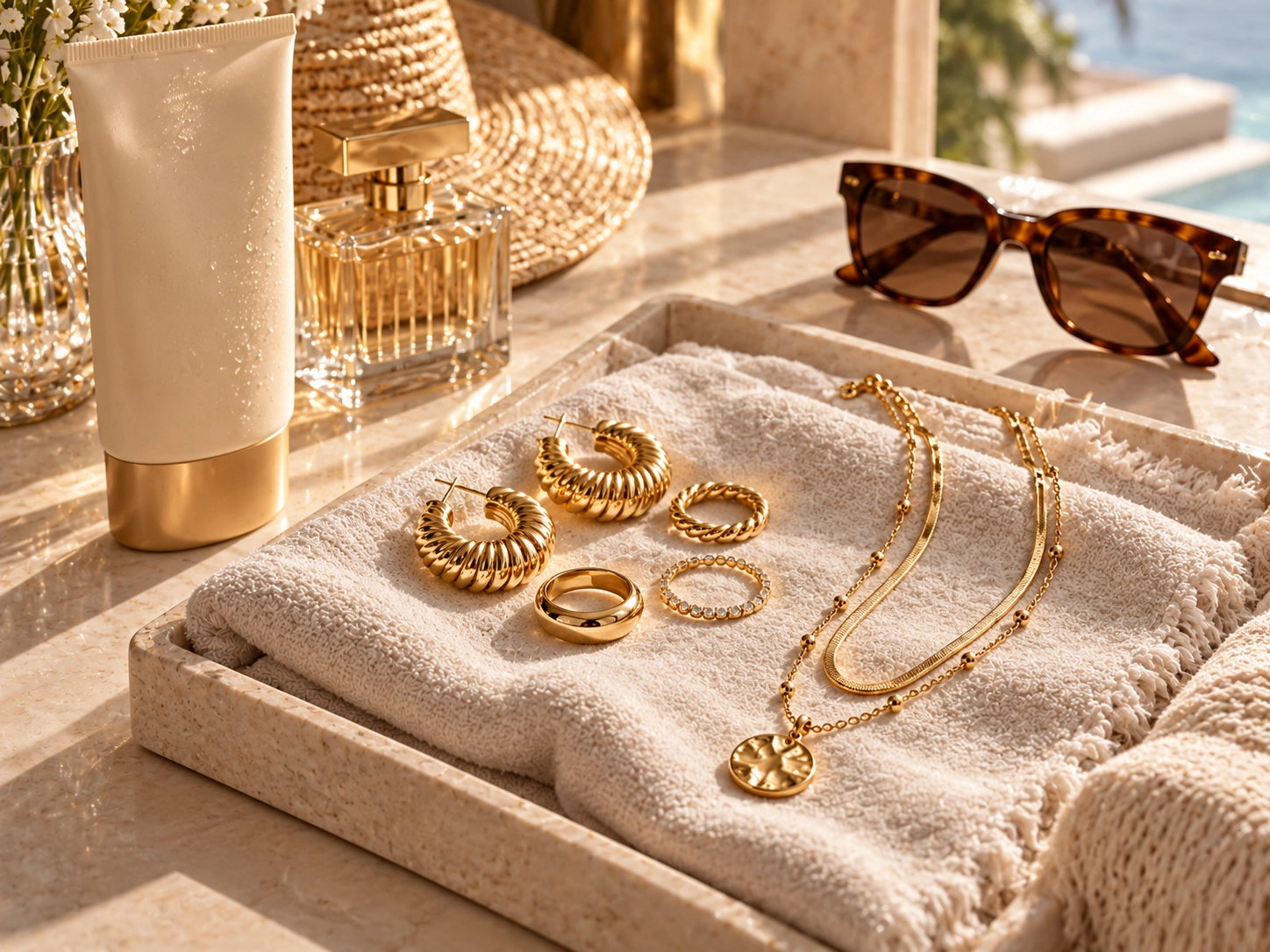
- Showering with jewelry on: Shampoo, shower gel, hot water and prolonged moisture can gradually affect the surface of jewelry.
- Wearing jewelry in the pool: Chlorine is an undesirable form of exposure, particularly for metal and plated surfaces.
- Wearing jewelry in the sea: Salt water, sand and sunscreen can all come into contact with the jewelry at the same time.
- Spraying perfume directly onto jewelry: Apply perfume first and put on your jewelry after it has dried.
- Cleaning while wearing jewelry: Avoid contact with detergents, bleach and other household cleaning chemicals.
- Scrubbing jewelry with toothpaste: Abrasive products can cause scratches and wear, particularly on plated surfaces.
- Throwing all jewelry into the same box: Pieces can scratch one another and wear down their surfaces.
A 30-Second Daily Care Routine for Your Jewelry
Jewelry care does not need to be difficult or time-consuming.
After taking off your jewelry, spend just a few seconds following this simple routine:
- Gently wipe the jewelry with a clean, dry microfiber cloth.
- Make sure there is no moisture or cosmetic residue left on the surface.
- If it is a chain piece, fasten it neatly to help prevent tangling.
- Place it in a separate compartment or soft pouch away from other jewelry.
This small habit can help prevent perspiration, cream and cosmetic residue from remaining on the surface of your jewelry for long periods.
Frequently Asked Questions
Can You Shower While Wearing Jewelry?
It is recommended to remove jewelry before showering, especially plated pieces. Soap, shampoo, hot water and prolonged moisture may cause plated surfaces to wear more quickly.
What Happens If Perfume Gets on Jewelry?
Perfume and cosmetic products should not be applied directly onto jewelry. Apply your perfume first and wait until your skin is dry before putting on your jewelry.
Can Tarnished Jewelry Be Cleaned with Toothpaste?
This is not recommended, particularly for plated jewelry. The abrasive nature of toothpaste may scratch the surface and cause the plating to wear away more quickly.
Can Baking Soda Be Used to Clean Jewelry?
Not every metal or coating reacts to baking soda in the same way. For this reason, it is safer to avoid abrasive home-cleaning methods such as baking soda when the exact material and plating of a piece are not known.
How Should Jewelry Be Stored?
Jewelry should be stored in a dry environment away from direct sunlight and, whenever possible, each piece should be kept in a separate compartment or soft jewelry pouch.
How Can Gold-Plated Jewelry Keep Its Color for Longer?
Reducing contact with perfume, creams, detergents, sea water and pool water, wiping the jewelry gently with a soft cloth after use, and storing pieces separately can help the plating remain beautiful for longer.
Wear and Care for Your Aulin Jewelry with Love
How long a piece of jewelry stays beautiful depends not only on the material from which it is made but also on how it is worn, cared for and stored.
Keeping your jewelry away from perfume and chemicals, removing it before showering or swimming, cleaning it gently after use and storing it separately from other pieces are simple habits that take only a few minutes but can make a significant difference over time.
Discover Aulin’s earrings, necklaces, bracelets and rings and find new pieces to complement your style.
Remember: The safest approach to jewelry care is to use gentle methods appropriate for the material of each piece and to avoid strong chemicals.